
We’ve all been there: you reach for the doorknob, and suddenly it refuses to budge. As simple as a door lock seems, a failing mechanism is incredibly frustrating, especially when it happens at the worst possible time.
Picture being late to leave for work and your deadbolt won’t throw, or rushing back inside for a forgotten phone only to have your key snap or get stuck in the cylinder.
Door lock problems usually stem from five main culprits: dirt buildup, weather expansion, frame shift, loose internal parts, or simple metal fatigue.
Before you force the handle and risk breaking the key, this guide walks you through the 6 most common door lock problems, quick DIY fixes you can try in under five minutes, and the warning signs that mean your lock needs professional repair.
The Quick Diagnostic
Whether you are standing in a drafty hallway with armfuls of groceries or late for an early morning commute, you don’t always have time to read a manual.
Use this quick reference guide to identify what is happening with your lock, what you can do right now, and when it is best to step back before a simple fix turns into a broken key.
Section 1: Quick Diagnostic Guide
| Problem | The Scene | Quick DIY Fix | When to Call Mr. Locks |
| Key Won’t Turn or Feels Stiff | The key goes into the keyway, but feels like it is turning through wet cement or hitting a wall. | Spray a dry PTFE or graphite lubricant into the keyway. Jiggle key gently. | The key feels springy, grinds heavily, or the lock cylinder is seized solid. |
| Door Latch Won’t Catch | You push the door shut, but it bounces right back open unless you slam it or pull hard on the handle. | Tighten loose hinge screws to lift the door; check for loose strike plate screws. | The door frame has shifted significantly or the latch mechanism is damaged. |
| Key Stuck in the Cylinder | You unlocked the door, but now the key is hostage—trapped halfway in, halfway out. | Apply lubricant around the key entrance; gently push, pull, and wiggle straight out. | The key snaps off, or forcing it feels like it will snap the brass. |
| Lock Cylinder Spins Completely | You turn the key, but it spins around like a loose carousel without throwing the bolt. | None (internal connection has disconnected or broken off). | Immediately—the tailpiece, cam, or internal set screw requires resecuring. |
| Deadbolt Sticking or Dragging | You can lock the door easily while it is open, but once shut, the thumbturn refuses to throw. | Realign the strike plate on the jam; check for weather-strip friction. | The mortise pocket or bolt hole needs custom drilling or frame adjustment. |
5 Most Common Door Lock Problems & Solutions
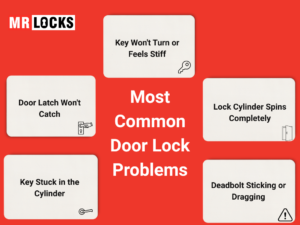
1. The Key is Hard to Turn or Feels Extremely Stiff
Those moments when you feel like you need the force of a superhero just to make your key move?
Yeah, that usually indicates a stiff key or a binding lock cylinder. It starts as a subtle resistance, a slight bump where you have to wiggle the key just right, and before you know it, locking your front door feels like a full-arm workout.
- The Scene: You slide the key all the way into the keyway, but as you try to turn it, you hit immediate, heavy resistance. You find yourself leaning into the door, jiggling the bow of the key, or using both hands just to throw the deadbolt.
- The Cause: Over time, outdoor grime, fine NYC street dust, and airborne debris get sucked into the keyway, coating the internal pins and springs. In humid months or during sudden temperature drops, trapped moisture turns that dust into a sticky paste. Other times, the tiny springs inside the cylinder are simply wearing down and failing to lift the pins cleanly.
How to Fix It Yourself
- Blow Out the Debris: Spray a quick blast of compressed air directly into the keyway to dislodge loose grit and dust buildup.
- Apply the Right Lubricant: Spray a generous burst of a dry lubricant—such as a PTFE dry spray, silicone-based lock spray, or dry powdered graphite—directly into the keyhole.
- Work the Mechanism: Insert your key fully, then pull it back out a few times to spread the lubricant across the pin tumblers. Gently turn the key back and forth without applying heavy pressure.
CRITICAL WARNING: Avoid using standard oil-based products like WD-40 or household cooking oils inside a lock cylinder. While they offer a quick fix today, the wet oil acts like glue for dirt, creating a thick sludge that will permanently jam your lock tumblers within a few weeks.
When to Call an Expert Locksmith
If you apply dry lubricant and the key still feels springy, grinding, or completely seized, do not apply extra force. Pushing harder will shear the brass key off inside the keyway, turning a quick repair into an emergency lockout. At this point, the internal pin tumblers are either damaged or bent, and the lock cylinder needs to be professionally disassembled, re-pinned, or replaced.
2. The Door Latch Won’t Catch or Keeps Bouncing Back
This is probably one of the most annoying situations to be in, especially when you are in a rush. You grab your coat, step out, pull the door firmly behind you, and the thing just bounces right back as if possessed by a very tricky ghost.
You slam it again, a little harder this time, only for it to pop open once more, leaving your home completely wide open.
- The Scene: The door swings smoothly in the frame, but the latch bolt refuses to drop into the hole of the strike plate on the jamb. No matter how many times you pull, push, or slam it shut, the door fails to click into place and hold.
- The Cause: 90% of the time, this comes down to structural movement and misalignment. Wood frames expand and contract with changing seasons and humidity. In older buildings, heavy doors gradually cause hinge screws to back out, making the door sag just a fraction of an inch, enough to drop the latch bolt slightly below the strike plate opening.
How to Fix It Yourself
- The Hinge Tighten Test: Open the door wide and inspect the top hinge. Use a screwdriver to tighten every screw connecting the hinge to both the door and the frame. If the door sagged, pulling the top hinge tight will immediately lift the latch back into place.
- Inspect the Strike Plate Markings: Look closely at the metal plate on the door frame. You will often see small scuff marks showing where the latch bolt is hitting (usually hitting too low or too far inside).
- Adjust the Plate: Loosen the strike plate screws, shift the plate slightly up or down to align with the marks, and retighten. If the opening is just slightly too small, use a metal hand file to widen the inside edge of the plate cutout by a millimeter or two.
When to Call an Expert Locksmith
If your door frame has warped significantly, or if the internal latch spring itself has snapped (meaning the bolt stays pulled inside the door and never extends out), simple screw adjustments won’t cut it. A professional locksmith can re-mortise the strike plate, re-align heavy structural doors, or replace the internal latch mechanism so your door closes securely on the very first try.
3. The Key is Stuck or Trapped Inside the Cylinder
Think about it: you put the key in, turn it, and… silence. Nothing happens. Trying to pull it back out makes you realize you are literally stuck in place, or worse, your key is the one stuck, hostage inside the door like a permanent fixture.
- The Scene: You unlocked or locked the door, but now the key refuses to slide out of the keyway. It might move a millimeter back and forth or wiggle loosely, but pulling straight back feels like it is locked in a vice.
- The Cause: This happens when the internal pins or springs bind up inside the lock plug while it is slightly out of alignment. If the lock cylinder hasn’t fully returned to its home position (12 o’clock), the pins can’t retract to release the cutouts on your key. Alternatively, a tiny burr on an old, worn-down brass key can catch on a pin inside the lock.
How to Fix It Yourself
- Find the True Neutral Position: Gently rotate the key back to its vertical resting position. Locks are designed to release keys only when the keyway is completely upright.
- The “Push-and-Turn” Trick: Push the flat face of the lock cylinder in with your thumb while gently pulling and wiggling the key bow with your other hand. This stabilizes the plug so the pins can release.
- Lubricate the Keyway: Spray a small burst of dry lubricant (or silicone spray) directly along the top and bottom ridges of the trapped key where it enters the keyway to ease the friction.
CRITICAL WARNING: Do not grab a pair of heavy pliers and force-pull the key straight out. Modern keys are made of soft brass; yank too hard at an angle, and the head of the key will snap right off, leaving the blade buried deep inside the plug.
When to Call an Expert Locksmith
Consider asking for professional help if the key snaps off flush with the cylinder face, or if it remains completely seized after lubricating and aligning the plug; stop pulling. Trying to dig a broken key out with paperclips or corkscrews usually shoves the broken fragment deeper into the lock, damaging the delicate pins inside. A locksmith uses specialized extraction tools to pull the broken blade out intact without forcing you to buy a whole new lock.
4. The Lock Cylinder Spins Completely Without Locking
Ever think it was possible that your door lock could dance?
As fun as it might sound, when you see the lock cylinder of a heavy-duty door twirling like a prima ballerina, it is anything but entertaining. You turn the key, expecting that reassuring, solid click, but instead, the whole lock cylinder just spins around and around in circles while your door stays stubbornly unlocked.
- The Scene: You insert your key and turn it, but there is zero resistance. The key and the center plug (or sometimes the entire lock body itself) rotate 360 degrees repeatedly without engaging the deadbolt or retracting the latch.
- The Cause: Inside every deadbolt or rim cylinder, a small metal bar, called a tailpiece or cam, connects the cylinder where you insert your key to the actual bolt mechanism inside the door. When a cylinder spins freely, that connecting piece has either snapped off from force, or the internal set screws holding the cylinder in place have worked themselves completely loose.
How to Fix It Yourself
- Check for External Loose Screws: Look at the interior side of your door. If you have a thumbturn deadbolt, check if the mounting screws securing the faceplate to the door are completely loose.
- Tighten the Mounting Screws: Use a screwdriver to snug up the interior plate screws. On simple residential deadbolts, tightening these pulls the inner and outer halves back together, which can sometimes re-engage a slipped tailpiece.
CRITICAL WARNING: If the cylinder is spinning because an internal set screw backed out inside a high-security lock (like a Medeco or Mul-T-Lock cylinder), turning the key repeatedly can crush the delicate internal cam spring. Stop spinning the key as soon as you notice the lack of resistance.
When to Call an Expert Locksmith
Did you tighten the visible plate screws and are still facing the same issue? The internal tailpiece or drive cam has likely snapped or disconnected inside the mortise housing. Fixing this requires taking off the entire lock assembly, pulling the cylinder, and replacing the snapped tailpiece or setting a new retaining screw. A professional locksmith can quickly replace the broken internal components without forcing you to purchase a completely new lock setup.
5. The Deadbolt Keeps Sticking or Dragging
You turn the thumbturn from inside your apartment, expecting a quick, smooth glide, but instead, you get a workout. The deadbolt feels like it is grinding through sand, stopping halfway through its turn unless you exert serious muscle or lean your shoulder heavily against the door.
- The Scene: The deadbolt throws cleanly and smoothly when the door is wide open, but the second you shut the door, turning the thumbturn or key requires pulling, pushing, or lifting the door to force the bolt into the wall.
- The Cause: This classic issue is almost always caused by door sag or seasonal wood expansion. Over time, the deadbolt hole in the door frame shifts out of alignment with the actual bolt inside the door. When you turn the key, the heavy brass bolt drags against the top, bottom, or lip of the metal strike box rather than sliding into empty air.
How to Fix It Yourself
- The Open-Door Test: Open the door wide and turn the thumbturn. If the deadbolt extends smoothly without grinding, the lock itself is fine; the issue is pure frame alignment.
- Find the Rub Spot: Apply a tiny dab of lipstick, dry-erase marker, or chalk to the tip of the deadbolt. Close the door and turn the lock until it hits resistance. Open the door and check the strike plate; the chalk mark will show you exactly where the bolt is dragging.
- File or Shift the Strike Box: Use a small metal hand file to carve away 1-2 millimeters of metal from the edge of the strike plate opening where the chalk transferred.
When to Call an Expert Locksmith
If your door frame has shifted significantly, common in older NYC brownstones and pre-war apartment buildings, simple filing won’t offer enough clearance.
Forcing a dragging deadbolt puts intense pressure on the internal tailpiece, which will eventually snap off inside the door. A locksmith can drop or re-mortise the strike pocket deeper into the wall frame, ensuring your deadbolt throws completely smoothly without requiring you to yank on the handle every time you lock up.
What NOT to Do When Your Door Lock Fails
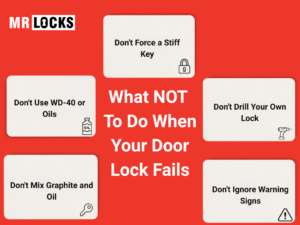
When a lock freezes up, or a key stops turning, natural instinct tells us to try a little extra force or grab whatever liquid spray is sitting under the sink.
But when it comes to precision lock mechanics, a quick aggressive move often turns a minor 5-minute fix into a costly emergency lockout.
- Don’t Force or Torque a Stiff Key: Keys are made of relatively soft brass. If a key resists turning, applying heavy pressure or using pliers will shear the key blade straight off inside the cylinder. Extractor tools can remove broken keys, but if the blade shatters deep inside, the whole thing will have to be replaced.
- Don’t Spray WD-40, Cooking Oils, or Household Grease: Standard WD-40 is a solvent, not a long-term lock lubricant. It leaves behind a thin, tacky film inside the cylinder that attracts street dust, lint, and debris. Within a few weeks, that mixture turns into a thick sludge that permanently gums up the internal pin tumblers.
- Don’t Mix Powdered Graphite with Liquid Oils: Dry graphite powder works wonders on clean pins, but if you pour graphite into a keyway that already has oil or moisture in it, it immediately creates a heavy, paste-like mixture that seizes the tiny springs inside.
- Don’t Try to Drill Out Your Own Lock: Internet tutorials make drilling out a lock look effortless, but without knowing the exact pin structure or drill depth, you run a high risk of destroying the internal door housing, warping the mounting plates, or permanently damaging the door frame.
- Don’t Ignore the Early Warning Signs: Locks rarely fail out of nowhere. A key that needs “jiggling,” a deadbolt that requires pushing the door with your shoulder, or a thumbturn that feels gritty are all early warnings. Fixing an alignment issue today prevents getting locked out in the middle of the night tomorrow.
Frequently Asked Questions About Door Lock Problems
Q: What is the best lubricant for door locks?
A: The best lubricant for door locks is a PTFE dry spray, silicone lock lubricant, or dry powdered graphite. These dry formulas lubricate the internal pin tumblers without leaving a sticky residue. Avoid using oil-based products like WD-40, cooking oils, or grease inside a lock cylinder, as oil attracts dirt and street dust, forming a thick sludge that eventually jams the lock.
Q: Why does my key only turn if I pull or push on the door?
A: If your key only turns when applying pressure to the door, you have a door alignment issue. Seasonal temperature changes and humidity cause wooden doors and frames to expand or shift, throwing the deadbolt or latch bolt out of alignment with the strike plate hole. Adjusting or filing the strike plate typically solves this problem.
Q: Can a jammed door lock be repaired, or do I need a whole new lock?
A: Most jammed door locks can be repaired without buying a whole new lock assembly. Common issues like dirt buildup, misaligned strike plates, loose mounting screws, or broken tailpieces can be fixed by cleaning, re-aligning, or replacing low-cost internal parts. Replacement is usually only necessary if the main lock body or high-security cylinder is physically cracked or severely worn.
Q: What should I do if my key snaps off inside the lock?
A: If your key snaps inside the cylinder, stop trying to turn or push it. If part of the key blade is sticking out, gently pull it straight out using needle-nose pliers. If the broken piece is deep inside the keyway, do not use glue, wire, or paperclips, as this pushes the fragment deeper into the pins. A professional locksmith can use specialized extraction tools to pull the broken blade out cleanly.
Q: Why does my lock cylinder spin 360 degrees without unlocking?
A: A lock cylinder that spins freely without throwing the bolt indicates that the internal tailpiece, drive cam, or set screw has disconnected or snapped. The cylinder itself is rotating, but it is no longer physically connected to the deadbolt mechanism inside the door. This requires removing the lock faceplate to resecure or replace the connecting tailpiece.
Don’t Get Locked Out, Get It Fixed Today
Need immediate help or want to schedule an installation?
- 📞 Call Us Now: 212-780-0144 (24/7 Emergency Dispatch)
- 💬 Get an Estimate: Request a Free Quote Online
- 📍 Serving: All 5 Boroughs of New York City